
Sovcoeluy-guide
Maratonskor: så väljer du ett par som håller i 42,2 km
Maratonskor är ett annat verktyg än din vardagssko. De är lättare, styvare och studsigare, och byggda för en enda uppgift: att hålla måltempot när benen slutar samarbeta. Här är vad som faktiskt spelar roll när du väljer ett par.
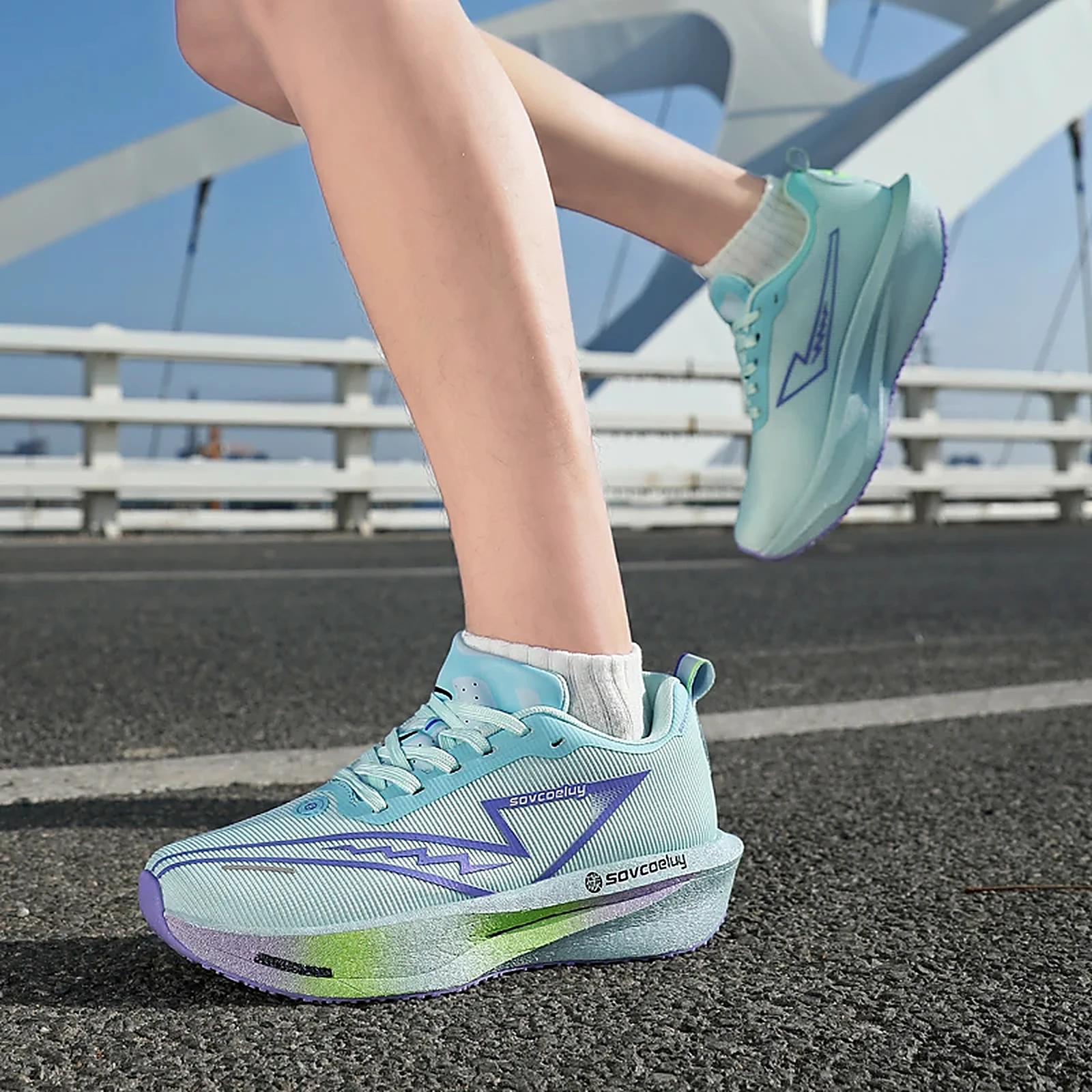
Sexpunktschecklistan
En platta för framdrivning
En styv kolfiber- eller kompositplatta hindrar tårna från att böjas sent i steget och rullar dig framåt istället. Det är den enskilt största skillnaden mellan en maratonsko och en vardagssko.
Studsigt skum med hög stack
Leta efter superkritiskt skum med hög stackhöjd. Det måste fortfarande ge tillbaka energi i timme tre, inte bara kännas mjukt i butiken.
Tävlingsvikt
Under 280 g. Varje extra 100 g kostar ungefär en procent av löpekonomin över maratondistansen.
En ovandel som beter sig vid 35 km
Tunn vävd mesh, minimalt med överlägg, inga sömmar tvärs över tåboxen — ömma punkter som är osynliga vid 5 km blir blåsor vid 35 km.
Sulgummi där du landar
Våta vägmarkeringar och målade övergångsställen är där tävlingar förloras. Kontrollera att det finns riktigt gummi under framfot och häl.
Storlek med utrymme att svälla
Cirka 1 cm utrymme vid tån. Mät foten sent på dagen, när den är som störst.
Kolfiberplatta eller inte?
Skor med platta förbättrar mätbart löpekonomin för de flesta löpare, vilket är varför de tog över maratonstartlinjen. Baksidan är belastning: en styv platta flyttar arbete från vaderna till höfterna och belastar hälsenan mer. Bygg upp i tre eller fyra pass innan du tävlar i dem, och använd dem inte till varje lugnt löppass — de är ett tävlingsverktyg.
Var Sovcoeluy Velocity Runner passar in
Sovcoeluy Velocity Runner byggdes för att göra maratonformeln med platta tillgänglig: en fjäderplatta genom en superkritisk skummittsula, en vävd mesh-ovandel och en vikt på ~250 g, till 399 kr med fri frakt världen över från sovcoshoes.com. Den får 4.8 av 5 över 1,247 löparrecensioner, och varje par har 30 dagars returrätt så att du kan testa passformen på riktiga mil.
Tävlingsskor för 399 kr
Tre färgställningar, EU 36–46, fri frakt världen över och 30 dagars öppet köp.
Handla Velocity RunnerVanliga frågor om maratonskor
Vilka löparskor använder maratonlöpare?
De flesta maratonlöpare tävlar i en lätt sko med en styv platta (kolfiber eller komposit) inbäddad i en tjock, mycket studsig mittsula. Kombinationen lagrar och återger energi vid frånskjutet och håller benen fräschare över 42,2 km än en traditionell platt sko.
Kan man springa ett maraton i skor med kolfiberplatta?
Ja — skor med platta är designade för exakt den distansen. Spring 30–50 km i dem innan tävlingsdagen så att vader och hälsena hinner vänja sig vid den styvare känslan, och håll de flesta lugna milen i en mjukare vardagssko.
Hur mycket ska maratonskor väga?
Sikta på under 280 g i en herrstorlek US 9. Sovcoeluy Velocity Runner väger ungefär 250 g, vilket är tävlingsvikt utan att ge avkall på dämpning.
Hur länge håller maratonskor?
Tävlingsskor med platta håller vanligtvis studsen i 250–400 km. Variera dem med en vardagssko och spara dem till tempopass, långpass och tävlingsdag.
Ska jag ta en storlek större i maratonskor?
Fötter sväller vid långdistans, så lämna cirka 1 cm mellan din längsta tå och skons spets. Om du är mellan storlekar, eller har breda fötter, ta en halv storlek större — vår storleksguide på produktsidan räknar ut det åt dig.